SUM Equities
AI systems that prove what they know. Not guess. From knowledge engines grounded in number theory to shipping products across commerce and research, with healthcare tooling in private development.
Flagship product Chefrson — tonight's dinner from what's already in your kitchen. chefrson.com →About Us

SUM Equities builds software across AI systems, agent observability, knowledge engines, and consumer applications. The portfolio includes a verifiable bidirectional knowledge engine grounded in number theory (SUM), a standards-native agent observability backend (HFAO), and a cross-platform kitchen management system in closed beta on Android with the web surface live.
The work ranges from low-level systems programming (Rust, Zig/WASM) through full-stack web platforms (TypeScript, React, Next.js) to AI/ML pipelines (DSPy, multi-model orchestration, vector search). What has shipped is deployed primarily on Cloudflare's edge network and Supabase; most of the portfolio is still in development, and each entry states which it is.
The common thread: taking complex technical ideas and turning them into working systems that people actually use. Not research papers — software.
Core Technologies
Verifiable surface
40 verifiable claims and 10 stated targets across 14 projects on the proof page — each tagged by epistemic status and a cited source. A stated target is not yet a verifiable claim; it is listed for transparency and excluded from the count above. GitHub counts are as of Aug 28, 2026: this build could not reach GitHub to refresh them.
Work
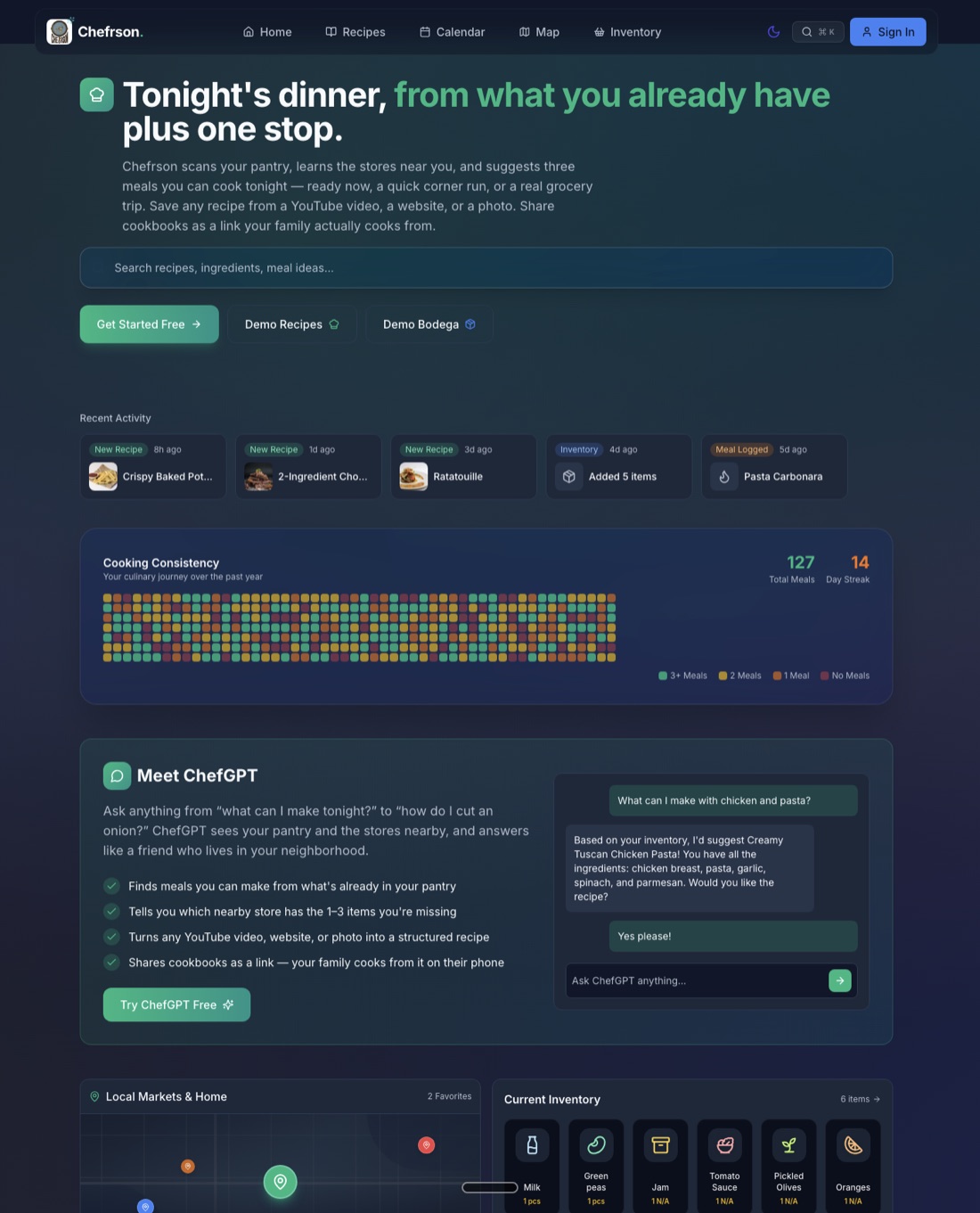
Chefrson — Smart Recipe & Inventory Management
Beta
Eat what you already bought: pantry-aware meal suggestions, recipe capture from any source, and nutrition tracking that logs itself when you cook. Web live, Android closed beta.
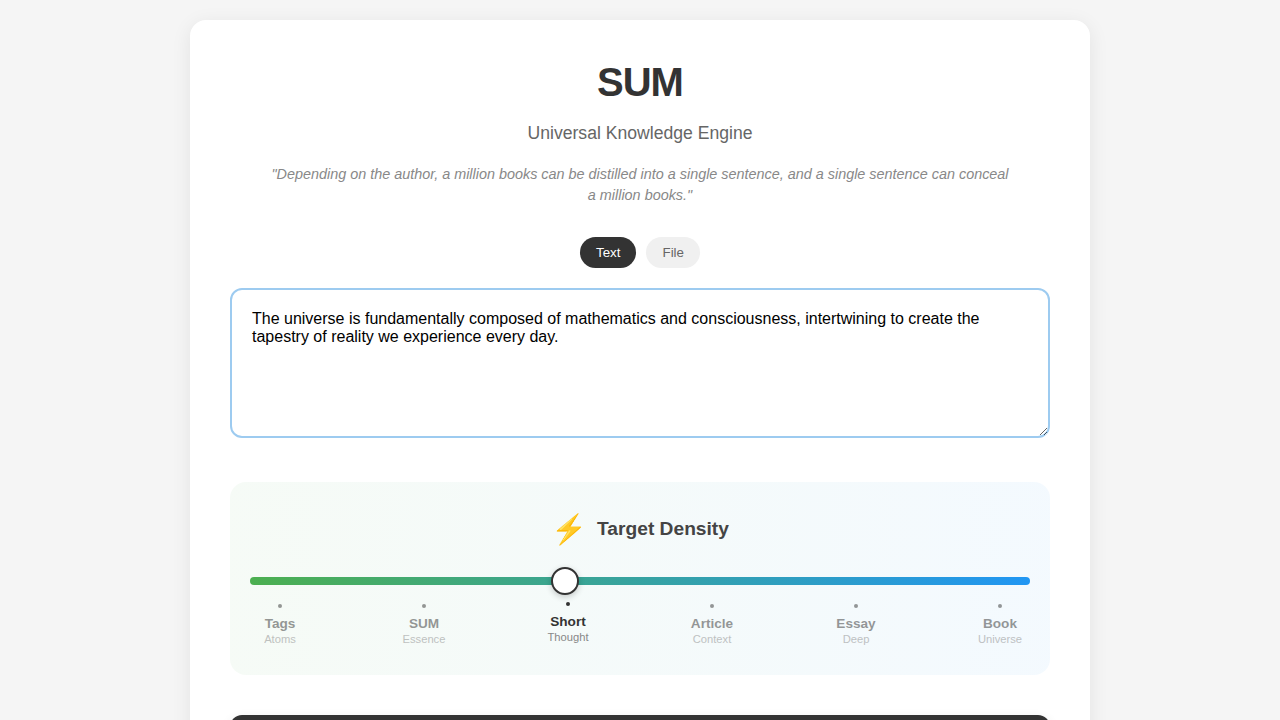
SUM — Verifiable Bidirectional Knowledge Distillation
Beta ★ 9 · 51 commits / 30d · as of Aug 28, 2026
Cryptographic provenance for AI knowledge transforms. Every transform — render, extract, compose, slider — emits a signed receipt anyone can verify offline. Six-regime compliance validators (EU AI Act, GDPR, HIPAA, SOC 2, ISO 27001, PCI DSS) and a layered sum verify --explain output landed in v0.7.0; the current PyPI release is v0.12.0. Same bytes verify identically in Python, Node, and modern browsers.
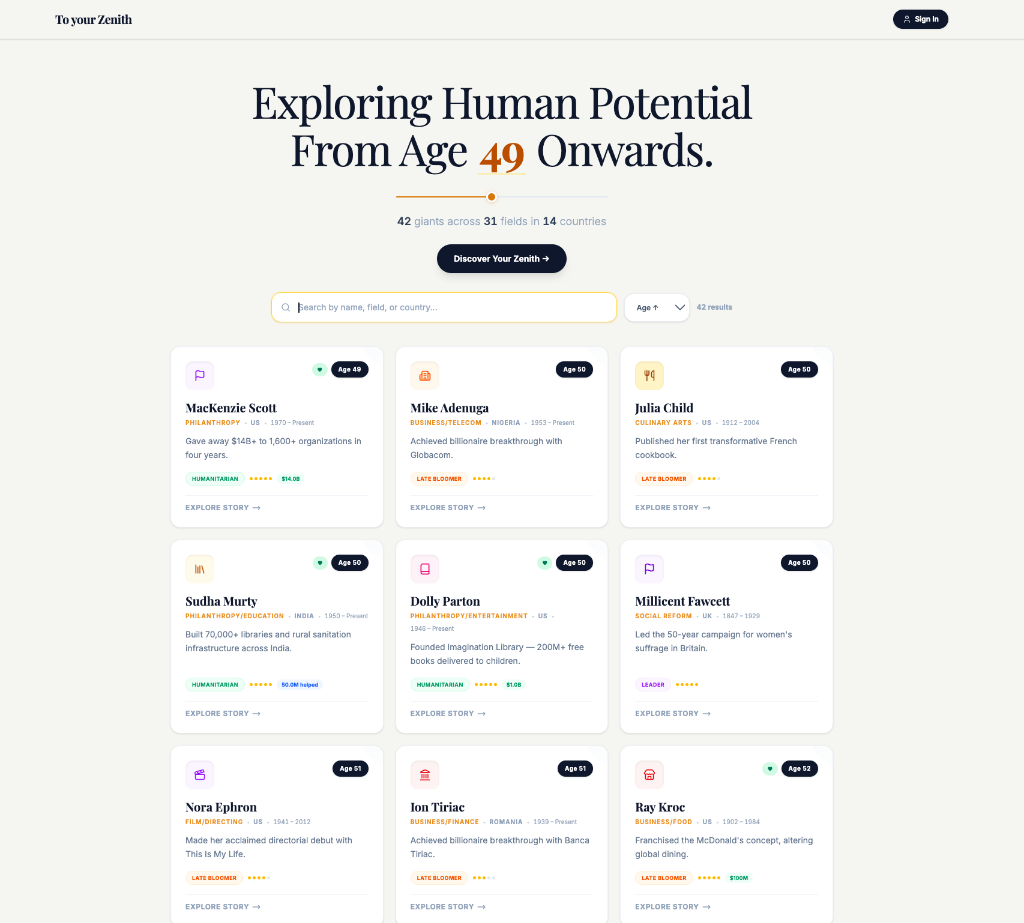
To your Zenith
Production
An interactive archive of 107 figures whose defining achievements span ages 2 to 109, paired with two no-account, browser-local layers that turn what you find into one real step.
4 shipped products · 13 experiments in the Lab
Get in Touch
Thanks — your submission was received.
That email address was not accepted, so nothing was sent. The message you typed was not kept: please re-enter it with a corrected address.
The bot check did not pass, so nothing was sent. Reload the page and try again, or use one of the links below to reach us.
The submission did not go through, and nothing was stored. Please try again, or use one of the links below to reach us.
Too many messages from this connection in a short time, so this one was not sent. Please wait a few minutes and try again, or use one of the links below to reach us.